
Why Gluconate-Based Plant Nutrition Works Better Than Traditional Fertilizers
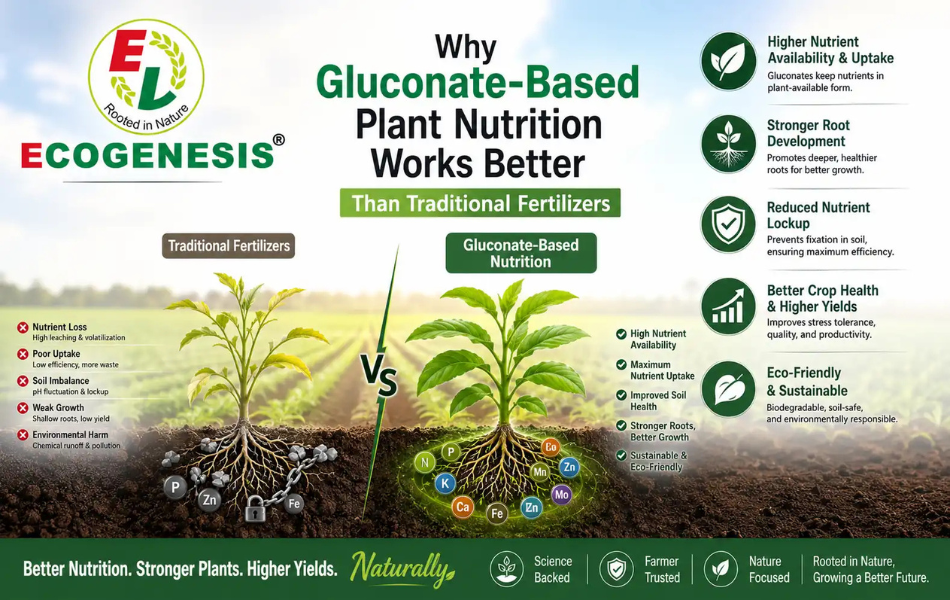
Why Gluconate-Based Plant Nutrition Works Better Than Traditional Fertilizers
Modern agriculture is rapidly evolving, and farmers are constantly searching for smarter and more efficient ways to improve crop productivity. One of the biggest challenges in farming today is ensuring proper plant nutrition while reducing fertilizer wastage and maintaining soil health. Traditional fertilizers have been used for decades, but they often fail to deliver nutrients efficiently due to issues like soil fixation, leaching, and slow absorption. This is where gluconate based plant nutrition is emerging as a revolutionary solution. It uses advanced organic nutrient complexes that help plants absorb essential nutrients faster and more effectively, resulting in better plant growth and improved yield.
Gluconate fertilizers are designed using gluconic acid, which binds with micronutrients and keeps them stable, soluble, and readily available for plant uptake. Unlike conventional fertilizers, which lose a significant portion of nutrients in the soil, plant nutrition using gluconates ensures higher nutrient uptake efficiency and minimal wastage. This makes it a highly effective option for modern agriculture, especially in regions like India where soil health and sustainable farming are major concerns. As farmers shift towards advanced fertilizer technology and eco-friendly practices, gluconate-based fertilizers are quickly becoming the preferred choice for achieving higher productivity with lower input costs.
What is Gluconate Fertilizer? (Beginner Guide)
Gluconate fertilizer is an advanced form of plant nutrition that uses organic compounds to deliver essential nutrients more efficiently to crops. In simple terms, gluconate based plant nutrition involves binding important micronutrients like zinc, iron, calcium, and magnesium with gluconic acid, creating highly stable and water-soluble nutrient complexes. These complexes ensure that nutrients remain available for plant uptake without getting locked in the soil. Unlike traditional fertilizers that often lose effectiveness due to chemical reactions in the soil, gluconate fertilizers maintain their stability and provide a continuous nutrient supply to plants. This makes them highly effective for both soil application and foliar spray, helping farmers achieve better results with less input.
How Gluconate-Based Plant Nutrition Works
Understanding how gluconate based plant nutrition works helps farmers and agronomists make smarter decisions about fertilizer use and crop management. Unlike traditional fertilizers that release nutrients slowly and often become unavailable due to soil reactions, gluconate fertilizers use organic complexes that remain highly soluble and mobile. When applied to soil or as a foliar spray, these nutrients are immediately available for plant uptake. The gluconate molecule acts as a natural carrier, protecting nutrients from being locked in the soil and ensuring they reach the plant roots or leaves efficiently. This mechanism significantly improves nutrient uptake efficiency and reduces losses caused by leaching or soil fixation, making it one of the most efficient plant nutrition methods in modern agriculture.
Gluconate vs Traditional Fertilizers (Detailed Comparison)
When comparing gluconate based plant nutrition with conventional fertilizers, the difference becomes very clear in terms of efficiency, absorption, and overall crop performance. Traditional fertilizers often release nutrients in forms that can easily react with soil components, leading to issues like nutrient fixation and leaching. This means a large portion of applied fertilizer is wasted before plants can even use it. On the other hand, gluconate fertilizers are designed to protect nutrients and keep them available in a soluble form, ensuring that plants receive maximum benefit from every application. This makes gluconate vs traditional fertilizers a critical comparison for farmers aiming to improve productivity while reducing input costs.
Key Benefits of Gluconate-Based Plant Nutrition
The growing popularity of gluconate based plant nutrition is mainly due to its wide range of benefits that directly improve crop health, yield, and farming efficiency. One of the biggest advantages is faster nutrient absorption, which allows plants to quickly utilize essential micronutrients without delay. This rapid uptake helps in correcting deficiencies almost immediately, leading to visible improvements in plant color, strength, and growth. Additionally, gluconate fertilizers enhance micronutrient absorption in plants by keeping nutrients in a stable and soluble form, ensuring they are readily available for uptake. This results in better root development, stronger plant structure, and improved resistance to environmental stress, making it one of the most efficient plant nutrition methods available today.
Advantages of Gluconate Nutrients in Agriculture
The use of gluconate based plant nutrition is transforming modern farming by offering multiple advantages that go beyond basic fertilization. One of the key strengths of gluconate nutrients is their ability to significantly improve nutrient uptake efficiency, ensuring that plants receive maximum benefit from every application. Unlike conventional fertilizers that often lose nutrients in the soil, gluconate fertilizers deliver nutrients directly to plant systems in a readily absorbable form. This leads to faster growth, stronger roots, and better resistance to stress conditions such as drought or poor soil quality. Additionally, these nutrients play a crucial role in soil health improvement by reducing chemical buildup and supporting balanced nutrient availability, making them ideal for long-term agricultural sustainability.
Role of Gluconate Fertilizers in Sustainable Farming
Sustainable agriculture is becoming a necessity rather than a choice, and gluconate based plant nutrition plays a vital role in achieving this goal. One of the biggest challenges in farming today is maintaining soil fertility while reducing the excessive use of chemical fertilizers. Traditional fertilizers often contribute to soil degradation, water pollution, and long-term environmental damage. In contrast, gluconate fertilizers support sustainable farming solutions by improving nutrient efficiency and reducing unnecessary chemical input. Since these fertilizers ensure better absorption and minimal loss, farmers can use smaller quantities while achieving better results. This not only lowers production costs but also helps in maintaining ecological balance, making gluconates an essential part of modern, responsible farming practices.
How to Use Gluconate-Based Fertilizers for Best Results
To get maximum benefits from gluconate based plant nutrition, it is important to follow the right application methods and timing. These fertilizers are highly versatile and can be applied through both soil and foliar methods, depending on crop requirements. Foliar spray is one of the most effective techniques, as it allows nutrients to be absorbed directly through the leaves, ensuring faster results. This method is especially useful for correcting micronutrient deficiencies quickly. On the other hand, soil application helps in maintaining long-term nutrient availability and supports root development. Since gluconate fertilizers are highly soluble, they work efficiently with modern irrigation systems like drip and sprinkler irrigation, making them suitable for modern agriculture techniques and precision farming practices.
Use Cases & Real-Life Benefits (Case Study)
The practical impact of gluconate based plant nutrition can be clearly seen in real farming scenarios where efficiency and yield improvement are critical. Many farmers who have shifted from traditional fertilizers to gluconate fertilizers have reported noticeable improvements in crop health within a short period. For example, in horticulture crops like grapes, tomatoes, and pomegranates, the use of plant nutrition using gluconates has shown faster correction of micronutrient deficiencies, leading to greener leaves, stronger stems, and better fruit quality. This rapid response is mainly due to improved micronutrient absorption in plants, which ensures that nutrients are quickly utilized rather than being lost in the soil. As a result, farmers experience visible growth enhancement and improved crop uniformity across their fields.
Common Problems with Traditional Fertilizers
Despite being widely used for decades, traditional fertilizers come with several limitations that reduce their effectiveness in modern agriculture. One of the biggest issues is nutrient loss due to soil fixation and leaching, where essential nutrients like nitrogen, phosphorus, and micronutrients get locked in the soil or washed away by water before plants can absorb them. This results in low nutrient uptake efficiency and forces farmers to apply higher quantities of fertilizers to achieve desired results. Over time, this not only increases input costs but also leads to soil degradation. In contrast, gluconate based plant nutrition addresses these challenges by keeping nutrients available in a soluble and plant-friendly form, ensuring better absorption and reduced wastage.
Why Gluconate Fertilizers Are the Future of Agriculture
The future of agriculture lies in efficiency, sustainability, and smart nutrient management, and gluconate based plant nutrition perfectly aligns with these goals. As global farming faces challenges like declining soil fertility, rising input costs, and climate change, the need for advanced solutions is increasing rapidly. Gluconate fertilizers offer a modern approach by delivering nutrients in a highly efficient and plant-available form, reducing dependency on excessive chemical inputs. Their ability to provide fast nutrient absorption fertilizer solutions makes them ideal for high-value crops and intensive farming systems. As farmers adopt modern agriculture techniques such as precision farming and controlled irrigation, gluconate-based nutrition integrates seamlessly, ensuring optimal nutrient delivery and maximum crop productivity.
Best Fertilizers in Nashik & Maharashtra (Local SEO Section)
Nashik and other parts of Maharashtra are known for their diverse agriculture, including grapes, onions, pomegranates, and vegetables. With increasing demand for higher productivity and better crop quality, farmers in this region are actively looking for advanced solutions like gluconate based plant nutrition. The shift from traditional fertilizers to modern nutrient management practices is becoming more noticeable, especially among progressive farmers. Today, many agricultural suppliers are offering plant nutrition products in Maharashtra that focus on improved efficiency and sustainability. Among these, gluconate fertilizers are gaining popularity due to their ability to provide faster nutrient absorption and better crop performance, making them one of the best fertilizers in Nashik for modern farming needs.
People Also Ask (FAQ Section)
What is gluconate fertilizer?
Gluconate fertilizer is an advanced plant nutrition solution where essential nutrients are bonded with gluconic acid. This creates highly soluble and stable nutrient complexes that plants can absorb quickly. It improves nutrient availability, reduces soil loss, and enhances overall plant growth and productivity.
Is gluconate better than chelated fertilizers?
Yes, in many cases gluconate fertilizers perform better than chelated fertilizers due to faster absorption and higher mobility within plants. They are more efficient in foliar application and reduce nutrient wastage, making them a more effective and eco-friendly option for modern agriculture.
How do gluconates help in plant growth?
Gluconates help plants grow by improving nutrient uptake efficiency and delivering micronutrients directly into plant tissues. This leads to faster correction of deficiencies, stronger roots, better leaf development, and overall improved crop yield and quality in a shorter time.
Are gluconate fertilizers eco-friendly?
Yes, gluconate fertilizers are considered eco-friendly because they reduce nutrient leaching and chemical runoff. They improve soil health, minimize environmental impact, and support sustainable farming practices, making them a safer alternative to traditional chemical fertilizers.
Conclusion: Why Gluconate-Based Plant Nutrition is the Smart Choice for Modern Farming
In today’s competitive and resource-sensitive agricultural environment, choosing the right fertilizer strategy is more important than ever. As we have explored, gluconate based plant nutrition offers a powerful alternative to traditional fertilizers by delivering nutrients more efficiently, reducing wastage, and improving overall crop performance. Unlike conventional methods that suffer from issues like soil fixation and leaching, gluconate fertilizers ensure that essential nutrients remain available and are quickly absorbed by plants. This leads to faster growth, better crop quality, and higher yields, making it an ideal solution for farmers who want to maximize productivity while controlling input costs.