
Gluconate-Based Farming Products: A Complete FAQ Guide for Farmers
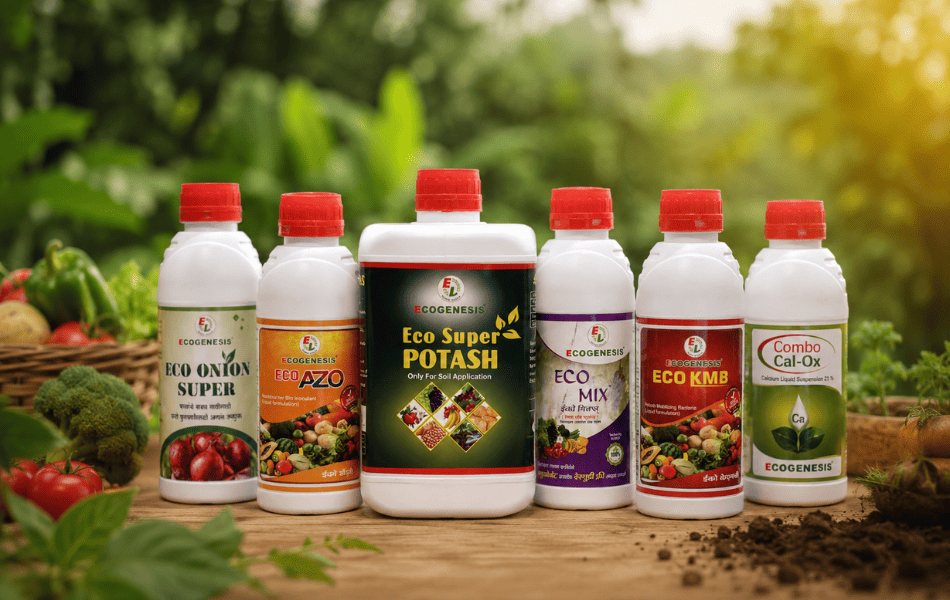
Gluconate-Based Farming Products: A Complete FAQ Guide for Farmers
If you've been researching plant nutrition lately, you've probably come across gluconate-based farming products — a category of micronutrient fertilizers that's growing fast among progressive farmers in Maharashtra and across India. But with new terminology comes new confusion: How is gluconate different from regular fertilizer? Is it safe? How much should you use, and on which crops?
This guide answers the most common questions farmers, dealers, and Krushi Seva Kendra owners ask about gluconate fertilizers — in plain, practical language, with no jargon left unexplained.
What Are Gluconate-Based Farming Products?
Gluconate-based farming products are micronutrient fertilizers in which essential elements — like zinc, iron, manganese, or calcium — are bonded to gluconic acid, a naturally occurring organic acid. This bonding process (called chelation) keeps the nutrient in a form that plant roots and leaves can absorb quickly, instead of getting locked up in the soil.
In simple terms: a gluconate fertilizer delivers nutrients that are ready to use, rather than nutrients the plant has to "unlock" first. That's the core reason this category has become popular for crops like grapes, onion, pomegranate, and tomato, where nutrient timing directly affects yield and fruit quality.
Common gluconate-based nutrients used in farming include:
-
Zinc gluconate
-
Iron (ferrous) gluconate
-
Calcium gluconate
-
Manganese gluconate
-
Copper gluconate
How Do Gluconate Fertilizers Work in Plants?
Gluconic acid acts as a natural carrier molecule. When a micronutrient is bound to gluconate, it stays soluble and stable even in soils that are alkaline, saline, or high in calcium carbonate — conditions where plain mineral salts (like zinc sulphate) often become unavailable to roots.
Once absorbed — whether through soil uptake or foliar spray — the gluconate complex breaks down inside the plant, releasing the micronutrient exactly where it's needed for enzyme activity, chlorophyll formation, and cell development. This is why gluconate-based farming products are often described as having higher bioavailability compared to conventional fertilizer salts.
Benefits of Gluconate-Based Farming Products
|
Benefit |
Why It Matters |
|
Faster nutrient absorption |
Less nutrient lost to soil fixation |
|
Works in alkaline/saline soil |
Common issue across parts of Maharashtra |
|
Reduces micronutrient deficiency symptoms |
Fixes chlorosis, poor flowering, fruit cracking |
|
Compatible with drip and foliar systems |
Easy to integrate into existing schedules |
|
Lower application dose needed |
More efficient use per acre |
|
Supports better fruit size and colour |
Especially in grapes, pomegranate, citrus |
These advantages are why gluconate fertilizers are increasingly recommended alongside — not necessarily instead of — traditional NPK and organic inputs, as part of a balanced nutrition programme.
Frequently Asked Questions About Gluconate-Based Farming Products
1. What is the difference between gluconate and chelated (EDTA) micronutrients?
Both improve nutrient availability, but gluconate is an organic acid-based carrier, while EDTA is a synthetic chelating agent. Gluconate is generally considered gentler on soil microbiology and better suited for foliar use, while EDTA chelates are often preferred for soil-drench applications in very alkaline soils.
2. Which crops benefit most from gluconate-based nutrients?
Fruit and cash crops with high micronutrient demand respond best — particularly grapes, pomegranate, onion, tomato, citrus, banana, and cotton. These crops are prone to zinc, iron, or calcium deficiency, which gluconate fertilizers correct quickly without disturbing soil pH.
3. Should gluconate fertilizer be applied as a foliar spray or through soil/drip?
Both methods work, but foliar spray gives the fastest correction for visible deficiency symptoms. Soil or drip application is better for sustained, season-long nutrition. Many farmers combine both — foliar for quick fixes, drip for ongoing supply.
4. What is the correct dosage for gluconate-based fertilizers?
Dosage varies by product concentration and crop stage, typically ranging from 2-5 ml/litre for foliar spray. Always follow the label or your local Krushi Seva Kendra's crop-specific recommendation, since overdosing rarely improves results and can waste input cost.
5. Are gluconate fertilizers safe for organic or natural farming systems?
Many gluconate products are compatible with organic and natural farming approaches because gluconic acid is naturally derived and biodegradable. However, certification requirements vary, so farmers should confirm organic-input approval status with their certifying body before use.
6. Can gluconate fertilizers be mixed with other pesticides or fertilizers?
Most gluconate-based products mix well with common agrochemicals, but a jar (compatibility) test is recommended before tank-mixing anything new. Avoid mixing with strongly alkaline solutions, as this can affect stability and nutrient availability.
7. What is the shelf life of gluconate-based farming products?
Properly stored gluconate fertilizers typically remain effective for 18-24 months from the manufacturing date. Keep containers sealed, away from direct sunlight, and in a cool, dry place to preserve solubility and nutrient strength.
8. Do gluconate fertilizers work in alkaline or saline soils?
Yes — this is one of their biggest advantages. Gluconate keeps micronutrients soluble even where soil pH or salinity would normally lock them up, making these products especially useful across parts of Maharashtra with calcareous or saline soil profiles.
9. How is gluconate fertilizer priced compared to regular micronutrient fertilizer?
Gluconate-based products generally cost more per litre than basic mineral salts, but the lower dosage requirement and higher absorption often offset the price difference. Farmers should compare cost-per-acre-per-season rather than cost-per-litre alone.
10. How do I know if my crop needs a gluconate-based nutrient?
Watch for interveinal yellowing (iron/zinc deficiency), stunted growth, poor flowering, or fruit cracking. A soil or leaf tissue test gives the most accurate answer, but visible deficiency symptoms are usually a reliable early signal to consult your local agri-input dealer.
Gluconate Fertilizer vs. Traditional Micronutrient Fertilizer
|
Factor |
Gluconate-Based |
Traditional (Sulphate/Salt-Based) |
|
Absorption speed |
Fast |
Moderate to slow |
|
Performance in alkaline soil |
Strong |
Weak — prone to fixation |
|
Dosage required |
Lower |
Higher |
|
Foliar suitability |
Excellent |
Good, with care |
|
Typical cost per litre |
Higher |
Lower |
|
Organic-farming compatibility |
Often suitable |
Usually not |
Best Practices for Using Gluconate-Based Farming Products
-
Match the product to the deficiency. Don't apply zinc gluconate for an iron deficiency — a quick leaf-symptom check or soil test helps target the right nutrient.
-
Spray during cooler hours. Early morning or late evening reduces leaf burn risk and improves absorption.
-
Follow crop-stage timing. Flowering and fruit-set stages usually respond best to micronutrient correction.
-
Store correctly. Heat and direct sunlight reduce shelf life and nutrient stability.
-
Buy from a trusted Krushi Seva Kendra or dealer. Product quality and concentration vary between manufacturers, so sourcing matters as much as the input itself.
Common Mistakes Farmers Make with Gluconate Fertilizers
-
Overdosing, assuming more product means faster results — it doesn't, and it wastes money.
-
Mixing without a compatibility test, which can reduce effectiveness of both products.
-
Applying during peak afternoon heat, increasing the risk of leaf scorch.
-
Ignoring soil test data and guessing which micronutrient is actually deficient.
-
Skipping follow-up applications, treating a single spray as a permanent fix rather than part of a season-long nutrition plan.
Final Thoughts
Gluconate-based farming products have earned their place in modern crop nutrition because they solve a real, common problem: getting micronutrients into the plant reliably, even in difficult soils. Used correctly — right product, right dose, right timing — they can noticeably improve crop health, fruit quality, and yield consistency.
If you're unsure which gluconate-based product fits your crop and soil type, the best next step is a conversation with your local agri-input dealer or Krushi Seva Kendra, who can match the product to your field's actual deficiency rather than a generic recommendation.
Have a specific question about gluconate fertilizers that wasn't covered here? Drop it in the comments and we'll add it to this guide.