Golden Potash for Fruit Sizing and Sweetness: Application Timing Guide
Golden Potash for Fruit Sizing and Sweetness: Application Timing Guide
Golden Potash is a crop nutrition product that can be positioned around potassium management for fruit development, sizing, and quality. For fruit growers, understanding when to apply potassium and how to maintain balanced crop nutrition is important for supporting fruit growth, sugar accumulation, and marketable quality.
Potassium plays a vital role in water regulation, enzyme activation, photosynthesis, and the movement of sugars within plants. However, fruit size and sweetness also depend on the crop variety, sunlight, irrigation, crop load, maturity, and overall nutrient balance.
This guide explains the best stages to consider potassium nutrition, common signs of potassium deficiency, and practical application considerations for fruit crops.
How Golden Potash Supports Fruit Sizing and Sweetness
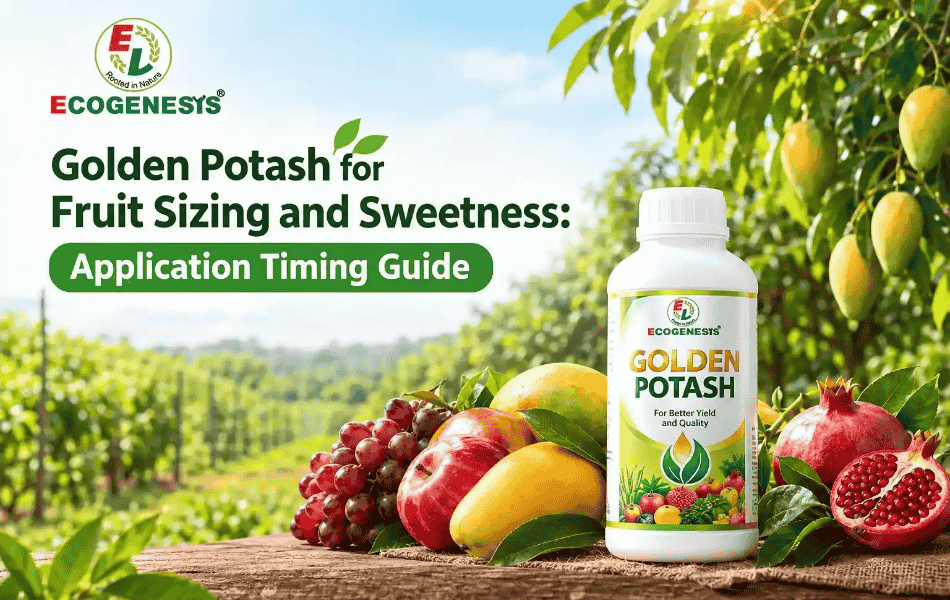
Product spotlight: Golden Potash · Ecogenesis Lifesciences
Potassium is one of the major nutrients required for fruit development and crop quality. Ecogenesis Lifesciences offers Golden Potash as a potassium supplement intended to support fruit quality, sugar formation, fruit size, and crop maturity.
1. Supports fruit growth
Adequate potassium helps regulate water movement and supports fruit expansion. Correcting a potassium deficiency can help crops reach their fruit-size potential.
2. Supports sugar accumulation
Potassium contributes to carbohydrate transport and plant metabolism, which are important during fruit development and ripening. The effect on sweetness depends on crop type and growing conditions.
3. Supports crop quality
Balanced potassium nutrition can contribute to fruit development and marketable quality. Variety, irrigation, crop load, and harvest maturity remain important factors.
Best Application Timing for Golden Potash
The best timing depends on the crop and its stage of development. In general, fruit development and enlargement are important stages for managing potassium nutrition.
|
Crop stage |
Nutrition focus |
Recommended approach |
|
Flowering |
Balanced nutrition |
Maintain adequate nutrients; avoid unnecessary potassium sprays. |
|
Fruit set |
Early fruit development |
Assess potassium needs and crop condition. |
|
Fruit enlargement |
Fruit size and growth |
Consider potassium supplementation if required. |
|
Fruit filling and ripening |
Quality and sugar accumulation |
Maintain balanced nutrition and consistent irrigation. |
|
Near harvest |
Final maturity |
Follow the product label and crop-specific pre-harvest guidance. |
Potassium demand varies by crop, and a stage-based program is more useful than following one fixed calendar for every fruit crops.
Common Signs of Potassium Deficiency
Potassium deficiency may affect fruit development and crop quality. Possible symptoms include:
-
Yellowing or scorching along older leaf margins.
-
Leaf curling or drying.
-
Reduced plant vigor.
-
Smaller or poorly developed fruits.
-
Uneven fruit development or delayed maturity.
These symptoms can also have other causes, so confirm the deficiency through soil or plant analysis and agronomic assessment before treating it.
Tips for Better Fruit Sizing and Sweetness
To make the most of a balanced potassium program:
-
Test the soil: Understand existing potassium availability.
-
Apply at the right stage: Pay attention to fruit set, enlargement, and filling.
-
Maintain consistent irrigation: Water stress can limit fruit growth and quality.
-
Balance nutrients: Excess nitrogen or imbalanced calcium, magnesium, and potassium can affect crop performance.
-
Follow the product label: Do not increase the dose in an attempt to force larger or sweeter fruit.
-
Monitor maturity: Fruit sweetness and quality depend on variety, sunlight, crop load, and harvest timing as well as nutrition.
Frequently Asked Questions
Does Golden Potash help increase fruit size?
Golden Potash is marketed to support fruit size and crop quality. Its actual effect depends on the crop's potassium status, formulation, application timing, and growing conditions.
When should Golden Potash be applied?
Fruit set through fruit enlargement and development can be important periods for potassium management. The exact timing should be selected according to the crop and its growth stage.
Can Golden Potash improve fruit sweetness?
Adequate potassium supports carbohydrate transport and plant metabolism, which contribute to fruit development. Improved sweetness is not guaranteed, particularly when potassium is already sufficient or other growth factors are limiting.
Is Golden Potash suitable for all fruit crops?
The product may be considered for different crops, but suitability and application timing should be verified for the specific crop and its label recommendations.
Conclusion
Golden Potash for fruit sizing and sweetness is a useful topic for fruit growers looking to understand the role of potassium in fruit development and quality. Applying potassium at an appropriate growth stage, maintaining consistent irrigation, and correcting confirmed nutrient deficiencies can help crops achieve their potential.
For Ecogenesis Lifesciences, Golden Potash can be presented as part of a balanced crop nutrition strategy focused on fruit development, quality, and yield—not as a guarantee of larger or sweeter fruits.