
Essential Plant Nutrients: Macro & Micro Nutrients Explained for Farmers
Essential Plant Nutrients: Macro & Micro Nutrients Explained for Farmers
Plant nutrients for crops play a crucial role in determining the overall health, growth, and productivity of agricultural produce. Without proper plant nutrition, crops fail to reach their full potential, resulting in lower yields and poor quality output. In modern agriculture, understanding essential plant nutrients has become more important than ever, especially as farmers aim to increase production while maintaining soil health. Whether you are using organic plant nutrients for farming or advanced liquid plant nutrients, having the right knowledge can significantly improve results.
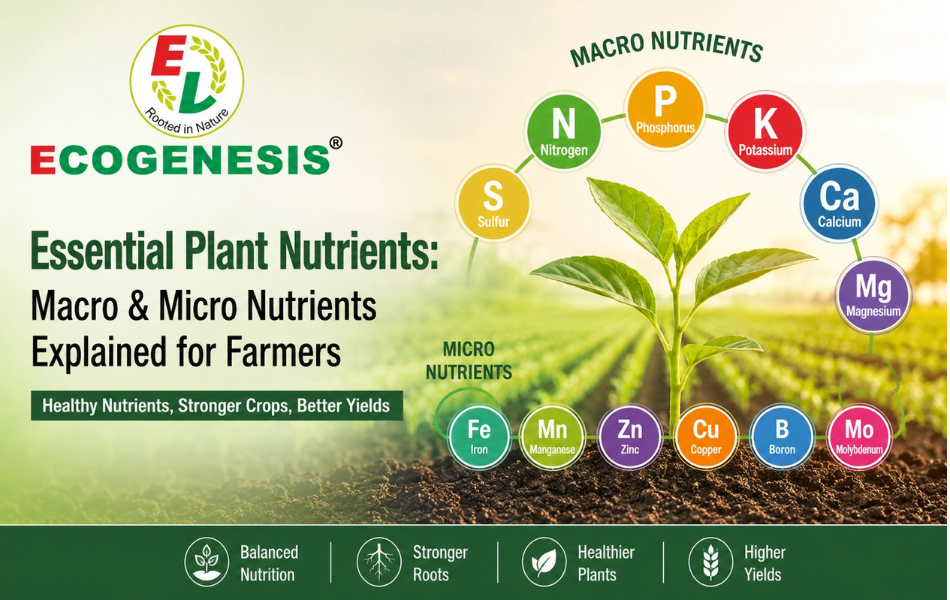
Essential plant nutrients are divided into two major categories: macro and micro nutrients in plants. Both types are equally important, even though they are required in different quantities. Macronutrients like nitrogen, phosphorus, and potassium are needed in larger amounts, while micronutrients such as zinc, iron, and boron are required in smaller quantities but are vital for plant metabolism. By understanding plant nutrition for agriculture, farmers can adopt better crop protection methods, reduce plant diseases, and ensure sustainable farming practices. This guide will help you understand nutrients required for plant growth in a simple and practical way.
What Are Essential Plant Nutrients for Crops?
Essential plant nutrients for crops are the chemical elements that plants must absorb from the soil, water, or air to complete their life cycle and produce healthy yields. These nutrients are directly involved in vital plant functions such as photosynthesis, root development, flowering, and fruit formation. Without proper plant nutrition, crops may show weak growth, low resistance to diseases, and reduced productivity. In agriculture, understanding plant nutrients for crops is the foundation for improving both quality and quantity of harvests.
Plants primarily absorb nutrients through their roots in dissolved form, which is why soil health plays a major role in plant nutrition for agriculture. Farmers today also use liquid plant nutrients, which are quickly absorbed and provide faster results compared to traditional fertilizers. There are 17 essential plant nutrients required for plant growth, including carbon, hydrogen, oxygen, and mineral nutrients like nitrogen, phosphorus, potassium, calcium, magnesium, and micronutrients. Each nutrient has a specific role, and even a small deficiency can affect the entire crop cycle. By managing nutrients properly, farmers can improve crop protection, reduce dependency on chemicals, and ensure sustainable farming practices for long-term success.
Types of Plant Nutrients in Agriculture
Plant nutrients for crops are broadly classified into two main categories based on the quantity required by plants: macronutrients and micronutrients in plants. This classification helps farmers understand how to manage plant nutrition for agriculture effectively and apply the right fertilizers at the right time. Both types of nutrients are essential for plant growth nutrients, but the difference lies in the amount required, not their importance. A balanced supply of these nutrients ensures healthy crop development, better resistance to diseases, and improved yield.
Macronutrients are required in large quantities and include nitrogen, phosphorus, potassium, calcium, magnesium, and sulfur. These nutrients are responsible for major plant functions such as leaf growth, root development, and energy transfer. On the other hand, micronutrients like iron, zinc, boron, manganese, copper, and molybdenum are needed in smaller amounts but play a critical role in enzyme activity and plant metabolism. Even a slight deficiency in micronutrients can lead to serious crop issues. By understanding the difference between macro and micro nutrients in plants, farmers can adopt better fertilization strategies, use organic plant nutrients for farming, and improve overall crop health and productivity.
Macronutrients in Plants (Primary & Secondary Nutrients)
Macronutrients are the backbone of plant nutrients for crops, as they are required in large quantities to support growth, development, and yield. These nutrients are divided into primary macronutrients and secondary macronutrients, both of which play critical roles in plant nutrition for agriculture. Farmers must ensure a balanced supply of these plant growth nutrients to avoid deficiencies that can negatively impact crop productivity. Using the right combination of fertilizers, including liquid plant nutrients, helps deliver these essential elements efficiently to plants.
Primary Macronutrients (NPK)
The three most important macronutrients are Nitrogen (N), Phosphorus (P), and Potassium (K), commonly known as NPK. Nitrogen is responsible for leafy growth and green color due to chlorophyll formation. Phosphorus supports root development, flowering, and energy transfer within the plant. Potassium improves overall plant health, strengthens disease resistance, and enhances fruit quality. These nutrients are often included in the best fertilizer for plant growth and are essential at every stage of crop development.
Secondary Macronutrients
Secondary nutrients include Calcium (Ca), Magnesium (Mg), and Sulfur (S), which are equally important for plant structure and function. Calcium helps in cell wall formation and improves root strength. Magnesium is a key component of chlorophyll and supports photosynthesis, while sulfur is essential for protein synthesis and enzyme activity. A deficiency in any of these nutrients can lead to poor crop performance. By maintaining a proper balance of macro nutrients in plants, farmers can achieve better yields, improve crop protection, and ensure long-term soil fertility.
Micronutrients in Plants (Trace Elements Explained)
Micronutrients in plants are essential elements required in very small quantities, yet they play a powerful role in plant growth and overall crop productivity. Even though plants need these nutrients in trace amounts, their absence can severely affect plant metabolism, enzyme activity, and nutrient absorption. For farmers focusing on plant nutrients for crops, understanding micronutrients is just as important as managing macronutrients. A balanced supply of micronutrients ensures that plants grow properly, resist diseases, and produce high-quality yields.
The key micronutrients required for plant growth include Iron (Fe), Zinc (Zn), Boron (B), Manganese (Mn), Copper (Cu), and Molybdenum (Mo). Iron helps in chlorophyll formation and prevents yellowing of leaves, while zinc plays a vital role in growth hormone production. Boron supports flower and fruit development, and manganese helps in photosynthesis and nitrogen metabolism. Copper is important for enzyme activity, and molybdenum assists in nitrogen fixation. Deficiency of these nutrients can lead to symptoms like stunted growth, poor flowering, and reduced crop yield. By using organic plant nutrients for farming or advanced liquid plant nutrients, farmers can easily supply these elements and maintain optimal plant nutrition for agriculture.
Plant Nutrient Deficiency Symptoms and Solutions
Plant nutrient deficiency is one of the most common reasons behind poor crop performance, low yield, and weak plant health. When plants do not receive the required plant nutrients for crops, they begin to show visible symptoms such as yellowing leaves, slow growth, and poor flowering. Identifying these symptoms early is very important for farmers, as it helps in taking quick corrective actions. Proper plant nutrition for agriculture not only improves crop yield but also reduces the chances of plant diseases and pest attacks, making crop protection methods more effective.
Below is a simple table to help farmers quickly identify nutrient deficiencies and their solutions:
|
Nutrient |
Deficiency Symptoms |
Solution |
|
Nitrogen (N) |
Yellow leaves, slow growth |
Apply nitrogen-rich fertilizer |
|
Phosphorus (P) |
Weak roots, delayed flowering |
Use phosphorus fertilizers |
|
Potassium (K) |
Leaf edge burning, weak plants |
Add potash fertilizer |
|
Calcium (Ca) |
Poor root development |
Use calcium-based nutrients |
|
Magnesium (Mg) |
Yellowing between leaf veins |
Apply magnesium fertilizer |
|
Iron (Fe) |
Yellow young leaves |
Use iron supplements |
|
Zinc (Zn) |
Stunted growth, small leaves |
Apply zinc fertilizer |
To fix plant nutrition deficiency symptoms and solutions effectively, farmers should conduct soil testing and use balanced fertilizers. Liquid plant nutrients are especially useful as they provide faster absorption and quick results. Regular monitoring and timely application of nutrients can significantly improve plant health, boost productivity, and ensure better crop quality in sustainable farming practices.
Liquid Plant Nutrients vs Traditional Fertilizers
Choosing the right type of fertilizer is essential for providing proper plant nutrients for crops and maximizing agricultural productivity. Farmers today have two main options: liquid plant nutrients and traditional granular fertilizers. Both have their advantages, but understanding their differences can help in making better decisions for plant nutrition for agriculture. With modern farming practices evolving, liquid fertilizers are becoming increasingly popular due to their fast action and higher efficiency.
Liquid plant nutrients are easily soluble and quickly absorbed by plants through roots or leaves, making them ideal for immediate nutrient supply. They are especially useful in correcting nutrient deficiencies and improving plant growth nutrients during critical stages. On the other hand, traditional fertilizers release nutrients slowly and are suitable for long-term soil enrichment. However, they may take more time to show visible results. Below is a simple comparison:
|
Feature |
Liquid Fertilizers |
Granular Fertilizers |
|
Absorption |
Fast |
Slow |
|
Efficiency |
High |
Moderate |
|
Application |
Easy (spray/drip) |
Manual spreading |
|
Result Speed |
Quick |
Delayed |
For farmers looking for the best liquid fertilizer for crops in India, liquid nutrients offer better control, uniform application, and improved crop protection. Combining both types strategically can ensure balanced nutrition, improve soil health, and support sustainable farming practices.
Importance of Plant Nutrition in Agriculture
Plant nutrition for agriculture is one of the most critical factors that determines crop productivity, quality, and long-term soil sustainability. Providing the right plant nutrients for crops ensures that plants grow स्वस्थ, develop strong roots, and produce higher yields. Without balanced nutrition, even the best farming practices cannot deliver good results. Farmers who understand the importance of essential plant nutrients are able to optimize their inputs, reduce losses, and achieve consistent agricultural success.
The importance of plant nutrients goes beyond just growth; it directly impacts crop protection methods and resistance to diseases. Well-nourished plants are stronger and can naturally fight pests and infections, reducing the need for excessive chemical usage. Proper use of macro and micro nutrients in plants also improves soil fertility by maintaining nutrient balance and microbial activity. Additionally, using organic plant nutrients for farming helps in sustainable agriculture by protecting the environment and ensuring long-term productivity. By focusing on plant growth nutrients and adopting modern solutions like liquid plant nutrients, farmers can increase efficiency, reduce costs, and meet the growing demand for high-quality agricultural produce.
Organic Plant Nutrients for Farming
Organic plant nutrients for farming are becoming increasingly popular among farmers who want to improve soil health, reduce chemical dependency, and adopt sustainable agricultural practices. These nutrients are derived from natural sources such as compost, animal manure, plant extracts, and bio fertilizers, making them safe for both crops and the environment. When used correctly, organic plant nutrients help in maintaining a balanced supply of plant nutrients for crops while improving soil structure and microbial activity. This approach not only enhances plant growth nutrients but also supports long-term agricultural productivity.
One of the biggest advantages of organic plant nutrition for agriculture is its ability to improve soil fertility naturally over time. Unlike chemical fertilizers that may degrade soil quality with excessive use, organic nutrients increase organic matter content and promote beneficial microorganisms. Products like bio fertilizers, including phosphate solubilizing bacteria (PSB), help plants absorb nutrients more efficiently. Additionally, organic solutions play a key role in crop protection methods by strengthening plant immunity and reducing the risk of plant diseases. Farmers can combine organic plant nutrients with liquid plant nutrients to achieve better results. By adopting organic farming practices, farmers can produce healthier crops, meet market demand for chemical-free produce, and contribute to environmental sustainability.
Connection Between Plant Nutrition & Crop Protection
Plant nutrition and crop protection are closely connected, and farmers who understand this relationship can significantly improve crop health and yield. Proper plant nutrients for crops not only promote growth but also strengthen the plant’s natural defense system against pests and diseases. When plants receive balanced plant nutrition for agriculture, including both macro and micro nutrients in plants, they become more resistant to infections, reducing the need for excessive chemical treatments. This approach supports sustainable farming and helps lower production costs.
Well-nourished plants develop stronger cell walls, better root systems, and improved metabolic functions, which act as natural barriers against pests and pathogens. For example, potassium improves disease resistance, while calcium strengthens plant tissues, making it harder for diseases to spread. Similarly, micronutrients like zinc and boron play a role in enzyme activity and immune response. By combining proper nutrition with effective crop protection methods such as bio pesticides in India and organic solutions, farmers can achieve better pest control in agriculture. This integrated approach reduces dependency on harmful crop protection chemicals and promotes eco-friendly farming. Ultimately, maintaining balanced plant growth nutrients ensures healthier crops, improved yield quality, and long-term agricultural sustainability.
Best Practices to Improve Plant Growth Naturally
Improving plant growth naturally is one of the most effective ways to achieve sustainable farming while maintaining soil health and reducing input costs. Farmers can enhance plant nutrients for crops by following simple yet powerful practices that ensure balanced plant nutrition for agriculture. Natural methods not only improve crop yield but also strengthen plant immunity, making them more resistant to pests and diseases. By combining organic plant nutrients for farming with modern techniques like liquid plant nutrients, farmers can achieve optimal results without harming the environment.
Here are some best practices to improve plant growth naturally:
-
Soil Testing: Regular soil testing helps identify nutrient deficiencies and ensures the right application of fertilizers.
-
Balanced Fertilization: Use a mix of macro and micro nutrients in plants to maintain proper growth and development.
-
Use of Organic Inputs: Apply compost, manure, and bio fertilizers to improve soil fertility and microbial activity.
-
Crop Rotation: Rotating crops helps maintain soil nutrients and reduces pest buildup.
-
Efficient Irrigation: Proper water management helps in better nutrient absorption.
-
Use of Bio Pesticides: Eco-friendly solutions like bio pesticides in India support crop protection without harming soil health.
By adopting these practices, farmers can naturally improve plant growth nutrients, enhance crop quality, and reduce dependency on chemical fertilizers. This approach ensures long-term productivity and supports eco-friendly agriculture, which is essential for future farming success.
People Also Ask (Featured Snippet Section)
What are the 17 essential plant nutrients?
Plants require 17 essential nutrients to grow and complete their life cycle. These include carbon, hydrogen, and oxygen (from air and water), along with 14 mineral nutrients like nitrogen, phosphorus, potassium, calcium, magnesium, sulfur, iron, zinc, boron, manganese, copper, molybdenum, chlorine, and nickel.
Which nutrient is most important for plant growth?
No single nutrient is most important because all plant nutrients for crops work together. However, nitrogen is often considered critical as it supports leaf growth and chlorophyll formation, which directly affects photosynthesis and overall plant development.
What are macronutrients and micronutrients?
Macronutrients are nutrients required in large amounts, such as nitrogen, phosphorus, and potassium. Micronutrients are needed in small quantities, like zinc, iron, and boron, but they are equally important for plant metabolism and growth.
How do farmers improve soil nutrients naturally?
Farmers improve soil nutrients naturally by using organic plant nutrients for farming like compost, manure, and bio fertilizers. Practices like crop rotation, green manure, and soil testing also help maintain soil fertility and improve plant nutrition.
Conclusion: Balanced Plant Nutrition is Key for High Yield
Balanced plant nutrition is the foundation of successful farming and plays a vital role in improving crop productivity, quality, and sustainability. Understanding essential plant nutrients, including macro and micro nutrients in plants, allows farmers to make better decisions regarding fertilization and crop management. Proper use of plant nutrients for crops ensures that plants receive the right elements at the right time, resulting in stronger growth, better resistance to diseases, and higher yields. Whether using organic plant nutrients for farming or advanced liquid plant nutrients, maintaining balance is the key to long-term success.
Farmers who focus on plant nutrition for agriculture can significantly reduce crop losses and dependency on chemical-based crop protection methods. A well-nourished plant is naturally more resilient to pests and environmental stress, making farming more efficient and cost-effective. By adopting best practices like soil testing, balanced fertilization, and the use of bio fertilizers, farmers can enhance soil health and productivity. In today’s agriculture, where demand for high-quality produce is increasing, proper plant growth and nutrient management is essential. Investing in the right nutrition strategy not only boosts yield but also supports sustainable farming for future generations.